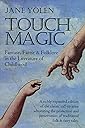
Touch Magic
Product ID: 7604104
Desertcart purchases this item on your behalf and handles shipping, customs, and support to Liechtenstein.
We must equip our children with story in order to keep them linked with the past and ready for the future. "Our children are growing up without their birthright: the myths, fairy tales, fantasies and folklore that are their proper legacy." The essays in Touch Magic, Jane Yolen's classic call-to-arms advocating the use of fantasy and folklore in children's literature, echo that statement. Yolen argues persuasively that fantasy, folklore, and the realm of story provide children with the necessary tools for facing the world, understanding its ways and capriciousness, indeed, becoming truly human. “I believe that culture begins in the cradle,” she writes. “To do without tales and stories and books is to lose humanity's past, is to have no star map for our future.” August House now offers a richly expanded version of this seminal volume. With six new essays that tender fresh perspectives on the morality of fairy tales, time travel, the definition of story, and, of course, why such themes are essential to the development of today's children, Touch Magic heralds a new millennium of fantasy, myth, and storytelling. “Story is our wall against the dark,” Yolen contends, and as adults, we must equip our children with story in order to keep them linked with the past and ready for the future. Touch magic, and pass it on. Review: Why fairy tales matter - Prolific writer Jane Yolen is a passionate proponent of the role of traditional folk and fairy tales in the lives of children. In Touch Magic, she warns "Our children are growing up without their birthright: the myths, fairy tales, fantasies and folklore that are their proper legacy. It is a serious loss." Traditional tales perform four crucial functions, Yolen argues. They provide ... 1. a landscape of allusion. (Example: How can you appreciate Shrek if you've never read Mother Goose rhymes and fairy tales?) 2. insight into ancestral cultures 3. a safe path for processing experience 4. a framework for an individual's beliefs and values "When we ... deprive [children] of the insights and poetic visions expressed in words that humans have produced throughout human history, we deny them - in the end - their own humanity," she writes. We bequeath to them a dry and shallow culture. Children deserve better. Review: Good Book - This was wanted for the information it contained. Not quite as expected but OK all the same.
| Best Sellers Rank | #1,876,843 in Books ( See Top 100 in Books ) #497 in Children's Literary Criticism (Books) #1,109 in Children's Folk Tale & Myth Anthologies #1,150 in Arts & Humanities Teaching Materials |
| Customer Reviews | 4.5 out of 5 stars 20 Reviews |
J**D
Why fairy tales matter
Prolific writer Jane Yolen is a passionate proponent of the role of traditional folk and fairy tales in the lives of children. In Touch Magic, she warns "Our children are growing up without their birthright: the myths, fairy tales, fantasies and folklore that are their proper legacy. It is a serious loss." Traditional tales perform four crucial functions, Yolen argues. They provide ... 1. a landscape of allusion. (Example: How can you appreciate Shrek if you've never read Mother Goose rhymes and fairy tales?) 2. insight into ancestral cultures 3. a safe path for processing experience 4. a framework for an individual's beliefs and values "When we ... deprive [children] of the insights and poetic visions expressed in words that humans have produced throughout human history, we deny them - in the end - their own humanity," she writes. We bequeath to them a dry and shallow culture. Children deserve better.
C**M
Good Book
This was wanted for the information it contained. Not quite as expected but OK all the same.
A**N
Great book of essays
A more scholarly selection of essays than the book TAKE JOY by Jane Yolen that I recently read. Learned the original meaning of SHAZAM, which I've wondered about. I've just started reading it and like it so far. I've got two children's books on the back burner. I'm finding this book helpful.
S**S
wonderful book
I ordered this book back in December and received it in a timely manner. very good book, arrived in very good condition. I read it in very short order because it was well written and a great topic. will be part of my personal library for many years.
D**L
Helpful Perspective on Folk and Legendary Tales for Children
This book will touch on deep and meaningful experiences that you have had while reading as a child and reading to children. By reading those perspectives organized into a series of short essays, you will better be able to read and enjoy the classic tales and bring the most meaning to them for yourself and others. Although I spend a great deal of time thinking about children's literature, this book greatly extended by ability to conceptualize the context for benefiting from these stories. Ms. Yolen begins strongly by pointing out many of the most important distinctions between oral and written literature. Most of our classic children's stories began in the former, and have been migrating into the latter. The story teller plays a great role in the oral tradition, by adjusting the way the story is told to fit the audience. As parents, I think we all do this instinctively with young children, but gradually abdicate that role as the children learn to read silently to themselves. As story tellers, we can help point out the interesting and challenging parts of the stories. In so doing, we increase the likelihood that the child will learn more about what it means to be human. Many people are concerned because classic folk tales, like Little Red Riding Hood, have many layers of meaning and can be interpreted in some pretty fightening ways. Ms. Yolen cites research showing that children actually like the punishments to be extreme in such stories, as a reflection of their sense of justice. But when should we be able to treat the outsider harshly? Stories like Rumplestiltskin nicely raise that issue. Whenever I review children's books, I try to point out these opportunities for exploring moral issues. One of the strengths of the folk tales is that they are full of moral issues, and questions of choice. For example, even when you take on the powers of magic, there is often a price to be paid. At another level, these stories capture parts of ourselves. By focusing in an imaginary world, they allow us to concentrate on that little sliver of ourselves. For example, anyone reading Peter Pan will remember sometimes feeling like Wendy and wanting to grow up, and sometimes feeling like Peter Pan and never wanting to grow up. By being poised with a choice on that ambivalence, a person can make a more successful determination about growing up and in what ways. No child would sit still for such a discussion without Barrie's powerful story. I was also impressed by the argument that we have many concepts that adults do not usually discuss in public company, like death, good, evil, God, and love. The folk and fairy tales are full of such subjects, and the "disbelief" that we suspend helps make us comfortable with dealing in these semi-taboo subjects. One of the best arguments in the essays is that by going through Alice's Looking Glass these stories must be very true about human nature, or we will reject them. They will simply be too remote and disconnected otherwise. So the more absurd the setting, the higher the potential for touching the universal. Naturally, there are things that are regrettable in these stories . . . but there are things that are regrettable in life. Moral conversation and discussion will always benefit from an early beginning in life. How will your children find out what you believe, if you do not use stories of all sorts as one context for explaining your ideas and experiences? I also agree with the praise here for the time travel books that allow us to more realistically consider earlier times. Now that people study so much less history, there is an increasing tendency to assume the past was much like the present. That has never been less true than now, as our knowledge and technology advance so rapidly. Perhaps the most persuasive argument of all is that these stories give us common metaphors for communicating with one another. In the absence of the Cinderella story, how can children deal with their universal secret suspicion that they were really born to royalty . . . not their own parents . . . and are fated for a great destiny? Having read many versions of Cinderella, as well as having seen the Walt Disney movie, I as shocked when I realized how impoverished this story would be if you had only seen the Walt Disney version. Then, having been shocked, I also remembered thinking how weak I thought the Walt Disney version was the first time I saw it as a youngster. That took me back to an age of consciousness where I had not been for many years. I was grateful for the experience. After you finish reading this book and considering its many important messages, I suggest that you also read The Golden Bough, which looks at legends and folklore around the world over time. From that perspective, you will begin to appreciate how common our yearnings and intrepretations are of common life issues and circumstances. It makes me feel closer to every other person when that thought resonates throughout my body while reading that outstanding book, like the reverbrations from an enhanting chanson performed by a troubador's medieval song and lute. May you touch others, and yourself, better through the most universal human stories from the oral tradition! Also, read aloud daily to your children and grandchildren. If you cannot be with them, you can still do this by telephone.
G**I
Compelling insight into the need for story and fantasy
Jane Yolen offers strong reasons for the absolute need children have for stories and fairy tales, in their glory as well as their gore. In brilliant, almost poetic prose, she lends perspective and personal insight into the food for our souls these stories provide. She shares a particularly powerful example from her own childhood, a book by E. Nesbit, THE POWER OF THE AMULET. As a Jewish child in New York City, reading this book in about 1946, she was completely drawn into the fantasy world created. Only as a young adult, upon re-reading years later, did she confront the anti-Semitic bias in the story. Her point is well-taken, that those themes that an adult considers "ugly," are not what a child who lives in fantasy will take from a story. Her other essays face head-on the objections that many have to the old tales, and she champions them in their original form. In the wake of the uproar created by the Harry Potter books, her essays are well worth considering. We are, as she says, in danger of denying our children their own humanity when we brush aside the many gems of folk and fairy lore.
C**E
Wonderful Resource and Discussion on Fantasy Literature
"It is true that fairy tales have an effect, but it is a healthy, nurturing, cathartic effect, not a fault. Using archetypes and symbolic language, they externalize for the listener conflicts and situations that cannot be spoken of or explained or as yet analyzed. They give substance to dreams." (p 44) In a time in which fantasy tales are often under challenge, Yolen makes a strong case for their importance in Touch Magic. She believes that, more than magic and mythical creatures, these stories are about acts of kindness or deceit, action and consequence, and the constant struggle to find a way to fit into the world you inhabit. As a result, "even very young children can absorb the meanings and wisdom of these symbolically expressed ancient tales and use them as tools for interpreting their own day-to-day experiences" (p 17.) With Part One: The Tale and the Teller, Yolen takes the reader back to the root of fantasy, to the oral tales that have molded nearly every piece of fantasy that has followed, and how each changed as they were written down, taking on the morals and ideologies of the cultures and times during which they were recorded. From Cinderella to Red Riding Hood, she skillfully discusses fairy tale variants, maintaining that the original story, which often refused to shy away from pain and violence, is a more honest reflection of humanity than the versions that children are presented with today. She states: "They are the most potent kind of magic, these tales, for they catch a glimpse of the soul beneath the skin" (p 50.) While this section is incredibly informative and thoughtful, Yolen dismisses some of the more modern adaptations of fairy tales, mostly those put forth by Walt Disney. The frequency with which she relies on pointing out the problems with his version of these stories comes across as a bit heavy-handed. And while she argues quite well as to why children do not need a watered down version of these tales, surely Disney's adaptations have some importance in the landscape of fantasy, if only to use as a counterpoint for children to work out on their own. From there, Yolen focuses on the quest aspect of fantasy stories, and how looking more closely at the metaphors inherent in each serves as a human touchstone. "[The] tensions of the stories carry us past the unbelievability of the magic into the credibility of miracles in our everyday lives" (p 61;) it's a potent thought, one that isn't often mentioned when someone hints at the need to censor these stories because they fear they will send children down the wrong path. "Why do those of us who love stories with layers of meaning have to defend our interest, as if that very interest makes us less capable citizens, wimps, nerds, or in league with the very devil?" (p 120) Touch Magic is a wonderful and thought-provoking look at a genre that is often derided; as a librarian, I cannot say how many times I've heard a young reader say that a parent does not want them reading another fantasy story, and after reading this book I feel better armed to defend the genre's place in their lives.
C**Y
Touch Magic: Fantasy, Faerie & Folklore
Thank you for sending the books out so quickly in great condition.
E**A
My treasure
So glad to have a hardcover edition - it's a treasure! e
Trustpilot
1 month ago
3 weeks ago